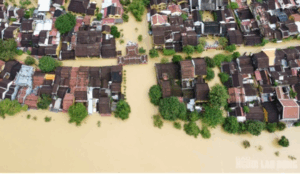
Central Vietnam’s Challenging Climate: Extreme Weather, Record Rainfall, and the Devastating Impacts of Recent Floods
The climate of Central Vietnam exhibits tropical monsoon characteristics, but with many differences and harshness due to the narrow and complex terrain. This region is divided into two distinct seasons: the dry season, from January to August, characterized by hot, sunny weather, which is suitable for beach tourism; and the rainy season, from September to December, marked by prolonged heavy rains. In particular, Central Vietnam frequently experiences extreme weather phenomena, such as storms, floods, landslides, and hot, dry Lao winds (also known as Southwest foehn winds) during the summer.
The climate differences are also clearly evident between sub-regions. While the North Central Coast (such as Thanh Hoa and Ha Tinh) experiences cold winters, the South Central Coast (such as Binh Dinh and Binh Thuan) has a warm climate year-round and a later rainy season. The provinces of the Central Coast (from Quang Binh to Quang Ngai) are the most severely affected by floods. Overall, the climate in Central Vietnam presents numerous challenges, necessitating that residents continually adapt and implement effective disaster prevention measures. Read More